About KAKATIYAM
Telangana Dance
KAKATIYAM – Telangana Dance is a reconstructed classical dance form that revives the movement language of the 12th–13th-century Kakatiya dynasty. Created by Padma Shri Dr. Gaddam Padmaja Reddy, it is built on three pillars:
Temple sculptures of the Kakatiya Dynasty,
Classical dance treatises, and
Living performance practice.
Kakatiyam is not Kuchipudi and not Perini Thandavam. It is a distinct, sculptural-rooted style, derived by decoding the dance postures carved on Kakatiya temples and aligning them with texts such as the Natyasastra and the Nritta Ratnavali by Jayapa Senani.
Origins in Kakatiya Heritage
The Kakatiya period was a golden age for Telugu culture, centred in today’s Telangana. Temples such as Ramappa Temple, the Thousand Pillar Temple, and Warangal Fort preserve a rich visual record of dance—Devadasis, queens, warriors, and celestial dancers frozen mid-movement in stone.
These sculptures are not mere decoration. They document a living dance tradition that existed before the codification of modern Bharatanatyam and Kuchipudi. In Nritta Ratnavali (1253 CE), Jayapa Senani describes this world of margi (classical) and desi (regional) forms—Perini, Bhramari, Kolattam, Gondali, Rasakam, Suda and more—performed in temples and royal courts.
Kakatiyam takes this Kakatiya heritage as its foundation and asks:
“If the dancers carved in stone could move again today, how would they dance?”
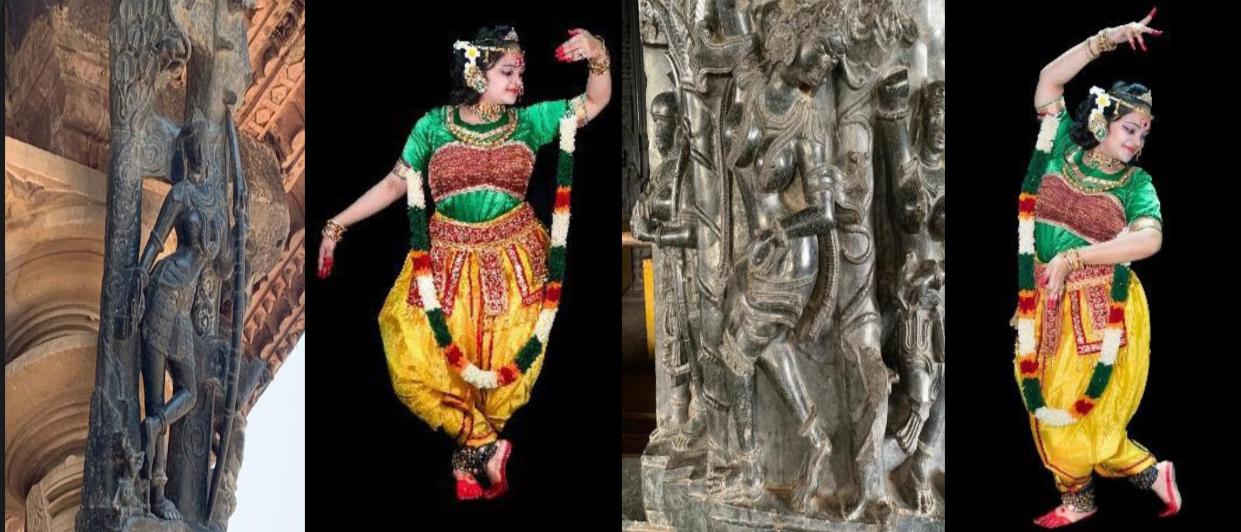
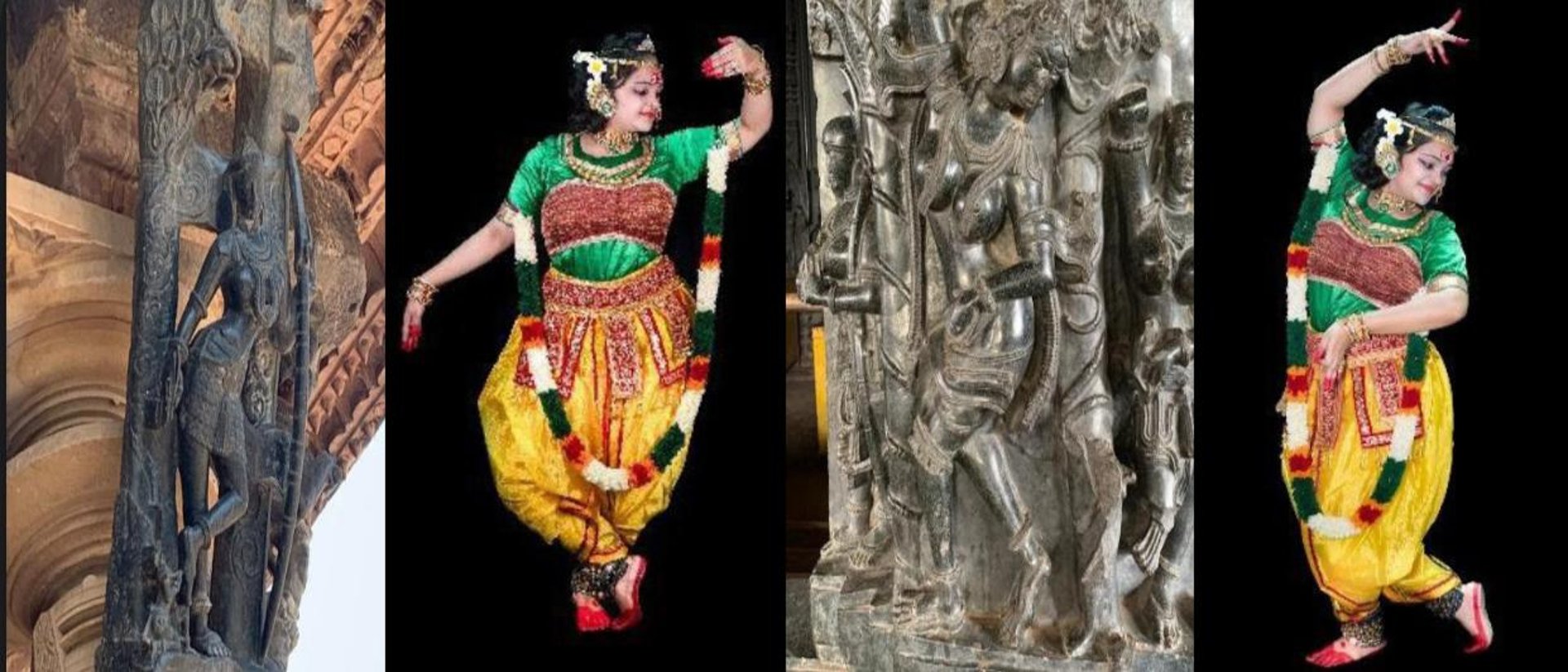
Sculptures as Living Notation
For Kakatiyam, the temple sculptures are treated as a kind of silent choreography.
Dr. Gaddam Padmaja Reddy and her team study:
The Madanika and other female figures on pillars and walls,
The angle of the feet, the placement of the hip, the curve of the torso,
The line of the arms, the tilt of the head, the direction of the gaze.
These postures are then decoded and rebuilt as repeatable dance positions and sequences. Where the texts describe pada bhedhas, sthanakas, caris, lasya, tandava, margi, desi, the sculptures show how these ideas looked on living bodies.
Kakatiyam stands exactly at that meeting point of Śāstra and Śilpa – scripture and sculpture.
A Distinct Style: Not Kuchipudi, Not Perini
Although Dr. Padmaja Reddy is a renowned Kuchipudi exponent, Kakatiyam is not another branch of Kuchipudi.
Kuchipudi has its own village-theatre lineage and primarily natya (dance drama) tradition.
Perini Thandavam is a vigorous, male-oriented warrior dance revived from Kakatiya sources.
Kakatiyam – Telangana Dance is different:
It focuses strongly on the feminine sculptural vocabulary – Devadasis, court dancers, Madanika-like figures.
It blends margi and desi elements described in Nritta Ratnavali into a new, cohesive stage technique.
Its movement grammar, stance, and body lines are directly drawn from Kakatiya temple sculptures, not from the later Kuchipudi village format.
In simple terms:
Kakatiyam is Telangana’s sculpture-born dance form, giving a clear, independent identity to Kakatiya-inspired movement on today’s stage.